

New York City construction and demolition sites must display specific information required by the city’s Construction Code. The New York City Department of Buildings identifies project information panels, sidewalk shed parapet panels, and other prescribed notices among these requirements. For a small contractor, overlooking one detail can lead to rushed corrections, added costs, or unwanted attention during an inspection.
Early-career contractors often treat signage as a minor purchase to handle shortly before work begins. A better approach is to research required formats, confirm project information, and order suitable contractor signs NY while permits, fencing, and site logistics are being organized. This turns signage from a last-minute obstacle into a planned compliance task.
1. The Cheapest Mounting Method May Cost More Later
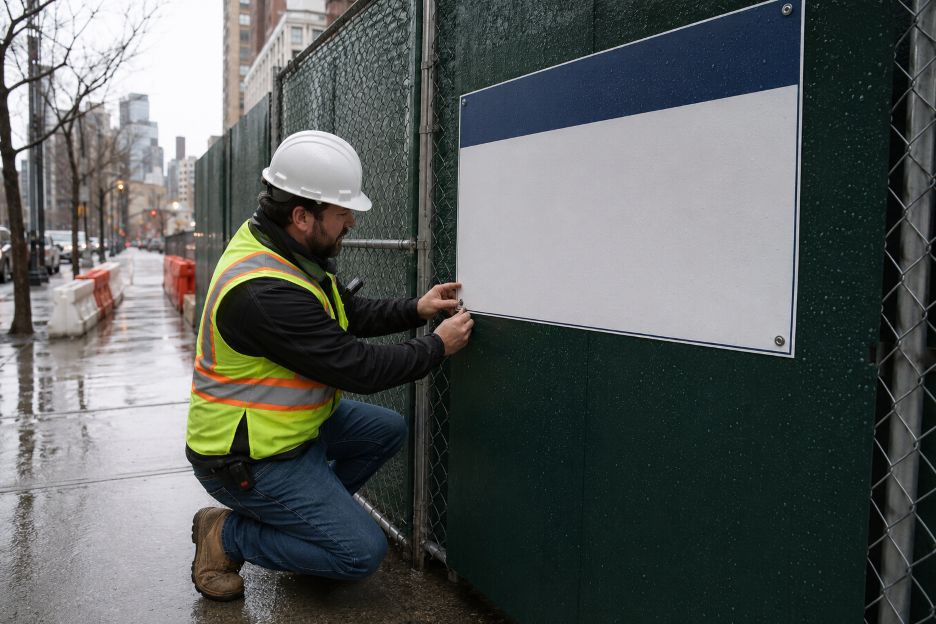
A common mistake is budgeting for the printed panel while giving little thought to fasteners, backing, or the surface receiving it. Thin ties, weak adhesive, and widely spaced screws may appear adequate indoors, yet outdoor signs face wind, rain, vibration, and daily site activity.
The practical fix is to plan the sign and mounting system together. The New York City Department of Buildings states that required fence panels must use durable, weatherproof, flame-retardant materials, such as vinyl, plastic, or aluminum. It also requires a panel four feet above grade on every fence perimeter facing a public thoroughfare. Contractors should therefore confirm the fence material, panel weight, hole placement, edge support, and suitable fasteners before ordering.
2. A Compliance Panel Cannot Be Ordered Like an Advertising Banner
Another early mistake is sending a printer a company logo, phone number, and approximate size, as though the job were a promotional banner. Regulated site displays have prescribed content and placement. Attractive branding cannot replace required information.
The solution is to build the artwork from the applicable agency specification. The New York City Department of Buildings explains that Construction Code Section 3301.9 governs signs at construction and demolition sites. Its guidance also notes that protective structures generally cannot carry advertising or other messages unless a legal exception applies. Contractors should identify the project type first, then verify the required panel, permit copy, contact information, languages, dimensions, and layout.
3. Legibility Matters More Than Fitting Everything Into the File
Small contractors sometimes shrink text to make late additions fit. The file may look readable on a laptop, but pedestrians and workers encounter the finished panel from several feet away, sometimes in poor light or around temporary equipment.
The better method is to review signage at its final dimensions. Print a sample of the smallest text, check contrast, and inspect the planned viewing distance. The Occupational Safety and Health Administration requires construction traffic-control signs at hazard points to be legible and supported by suitable control devices. OSHA also prescribes recognizable colors and formats for danger, caution, directional, and safety-instruction signs. These rules show why clarity should guide production decisions.
4. Reprints Rarely Arrive as Quickly as the Schedule Assumes
Incorrect addresses, outdated completion dates, changed contractor details, and damaged panels create a predictable problem: the site needs a correction immediately, while reprinting, finishing, and delivery require time. A schedule with no allowance for revisions can leave outdated information visible.
The fix is a controlled approval process. One person should compare every field with current permits and project records before production. The team should also ask the fabricator about proofing deadlines, typical turnaround, weather delays, and replacement options. Where permits appear on a panel, New York City rules for certain government-owned or funded projects require protection from the elements through lamination, a plastic covering, or direct printing on the panel. That requirement illustrates the value of planning for durability at the artwork stage.
5. Posting the Sign Is Not the End of the Task
A final mistake is treating installation as permanent completion. Fasteners loosen, panels become blocked by materials, printed details change, and crews may add unofficial notices around required information.
A short inspection routine provides the bridge from reactive corrections to steady compliance. This approach reflects the broader value of data-informed decision-making, where current information helps people recognize changes and respond effectively. Supervisors can include signs in opening checks, weekly walkthroughs, and post-storm reviews. They should confirm that panels remain secure, visible, readable, current, and free from prohibited additions. The New York City Department of Buildings specifically requires project displays to be positioned where passersby can see and read them, reinforcing the need for continued visibility rather than one-time installation.
Planning Ahead Is the Broader Lesson
Proper job site signage reflects a wider truth about regulated construction: small details become expensive when addressed late. Contractors who verify requirements, approve accurate artwork, select durable materials, plan mounting hardware, and allow time for replacements reduce avoidable disruption. For New York contractors, the sign itself is one visible result. The deeper lesson is to build compliance into purchasing, scheduling, and routine site supervision from the beginning.